QSBS Exemption and Strategic Planning:
A Founder's Guide to Section 1202
In This Guide
For founders of technology startups formed as C corporations, the tax code offers a generous but often overlooked opportunity: the potential to exclude up to $10 million in capital gains from federal taxation (and from state taxation in many states) through the Qualified Small Business Stock (QSBS) exemption under Section 1202 of the Internal Revenue Code.
If QSBS eligible stock is issued July 5, 2025, startup participants could exclude up to $15 million in capital gains now that the One Big Beautiful Bill Act (OBBBA) is the law of the land. It is important to note that while founders are the focal point of this article, employees, consultants, advisors, and investors all stand to benefit from the QSBS exemption as well.
This powerful tax break isn't just a one-time benefit. Through a strategic planning technique called “QSBS stacking,” founders can create multiple $10 million tax-free buckets (or multiple $15 million tax-free buckets if OBBBA eligible), multiplying their tax savings substantially.
For founders poised for a successful exit, understanding and properly structuring around QSBS qualification criteria isn't just tax planning — it's potentially saving millions of dollars, allowing you to fully realize the rewards of your innovation, risk-taking, and vision.
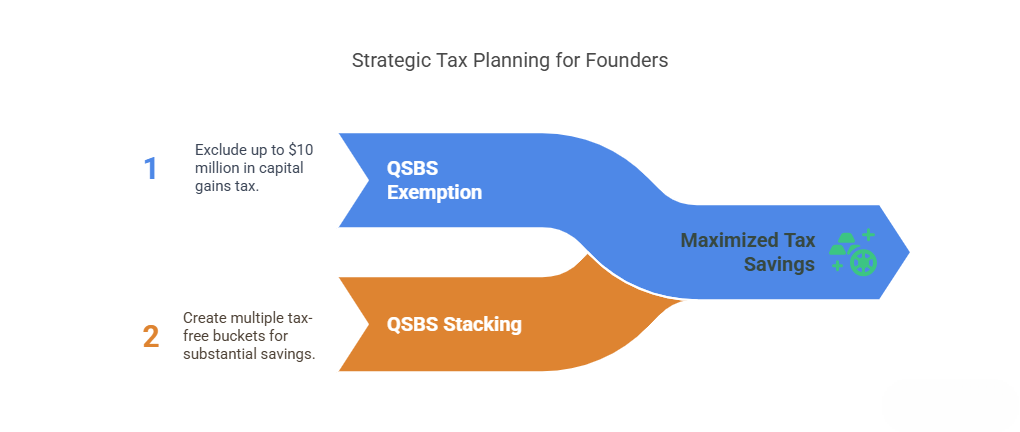
QSBS exemption overview for startup founders
What Is the QSBS Exemption? Your Default $10 Million Tax Break Under Section 1202
The purpose of the QSBS exemption is to encourage formation of and investment in new businesses. The reward for participating in a new business is an opportunity to exclude capital gains from federal income tax. The main catch, assuming the stock in the new business is QSBS eligible, is the stock must be held for five years or more prior to its sale (the holding period dynamics for OBBBA eligible stock is improved). This is called the holding period. For stock that is issued after July 5, 2025, eligible taxpayers not only benefit from excluding up to 100% of the gain when stock is held for 5 or more years, but also enjoy partial exclusions for shorter holding periods — a significant advantage compared to the previous all-or-nothing approach.
While often referred to as a “small business” stock exemption, the criteria for a “qualified small business” specifically includes companies with aggregate gross assets of $50 million ($75 million for OBBBA stock) or less at the time the stock is originally issued. This definition means that founders of many rapidly growing startups still qualify for this valuable default tax break.
The benefit of the QSBS exemption is substantial: a non-corporate shareholder, which includes individuals, trusts, and estates, can exclude from their gross income the gain from the sale of QSBS, up to the greater of $10 million or 10 times the taxpayer's basis in the stock. For founders who typically acquire their initial stock at par value (often $0.00001 per share), the $10 million cap is usually the relevant limitation since it far exceeds what 10x their basis would yield. Conversely, for investors who contribute capital in a company that is worth millions (but under the previously mentioned $50M and $75M aggregate gross asset cap), the 10x basis rule could potentially lead to a much larger tax exclusion if the company experiences substantial growth.
QSBS Eligibility Requirements: Key Qualification Criteria
For companies registered prior to July 5, 2025
- C Corporation Structure — The company must be a domestic C corporation (not an S corporation or LLC)
- Five-Year Holding Period — Stock must be held for more than 5 years before sale
- $50 Million Asset Limit — Company must have aggregate gross assets of $50 million or less when stock is issued
- Active Business Requirement — At least 80% of assets must be used in active business operations
- Original Issuance — Stock must be acquired directly from the company at original issuance
- Business Type Restrictions — Certain service businesses are excluded (health, law, financial services, etc.)
- Exclusion cap — Capital gains in the amount of the greater of $10 million or 10x the holder's basis can be excluded
Updates in the law for companies registered after July 5, 2025
- Holding Period — Updated to a tiered schedule: 3 years = 50% exclusion, 4 years = 75% exclusion, 5+ years = 100% exclusion
- Asset Limit — Changed to $75 million
- Exclusion cap — Now $15 million of capital gains can be excluded. The 10x basis option remains.
Use our interactive eligibility checklist to walk through these requirements →
QSBS Stacking: How to Multiply Your Tax Exclusion
Understanding QSBS Stacking — A Second Bite at the Apple
While the QSBS exemption offers a significant default tax break of $10 million ($15M if OBBBA eligible, or 10x your basis) per qualified taxpayer, a powerful strategy known as QSBS stacking allows founders to take multiple bites at this tax-saving apple. This technique creates additional $10 million (or $15 million if OBBBA eligible) tax-free buckets beyond the initial exemption, substantially amplifying potential tax savings for founders whose exits may exceed the individual limit.
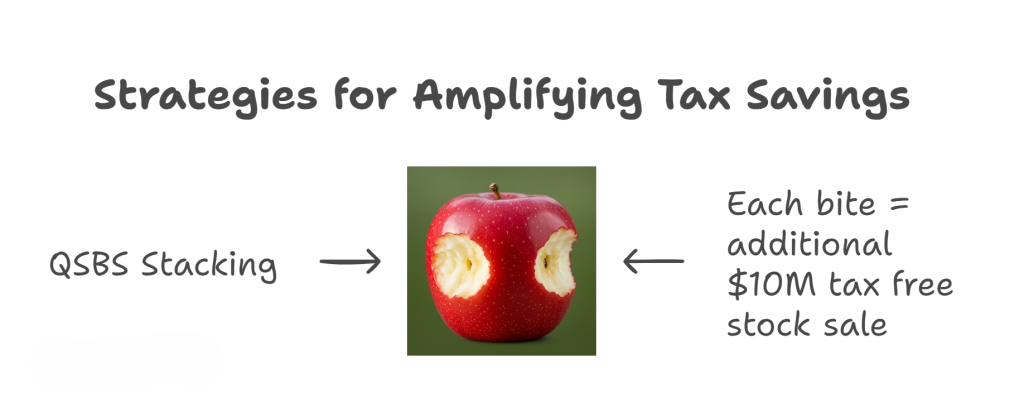
Strategies for amplifying QSBS tax savings
The Separate Taxpayer Strategy: Multiplying Your $10M or $15M Exclusion
Multiplying Your $10M or $15M Exemptions
The fundamental principle that makes QSBS stacking work is that the $10 million (or $15 million if OBBBA eligible) exclusion limit applies per taxpayer, not per company. This creates a powerful opportunity to multiply your tax savings through strategic planning.
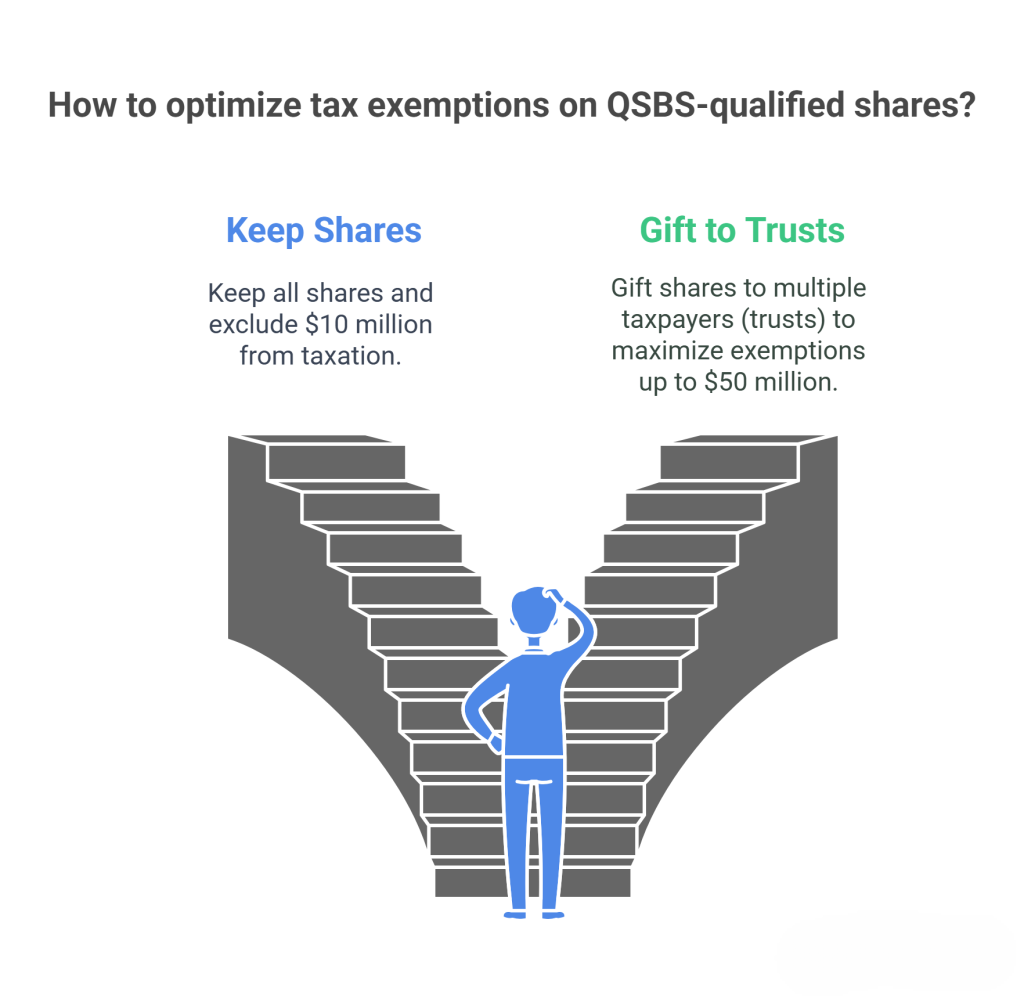
QSBS stacking strategy — multiplying exclusions through separate taxpayers
For example: If you're a founder whose stock is worth $50 million, you could:
- Keep all shares personally and exclude $10 million of taxation from your $50 million gain upon a sale
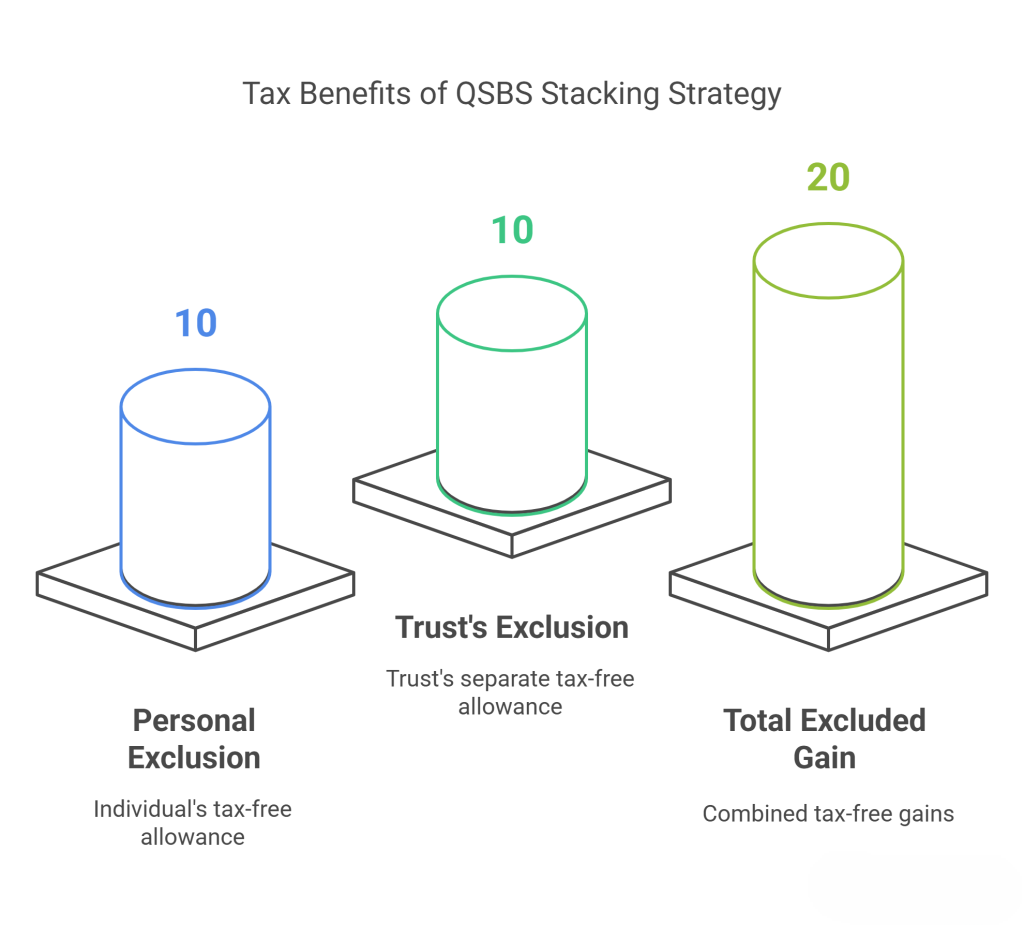
- OR gift a certain number of your shares to 4 separate non-grantor trusts (each a distinct taxpayer), creating five $10 million exemptions (including your personal share) that could offset your entire $50 million gain
Gifting QSBS Shares: The Foundation of Stacking Strategies
The cornerstone of effective QSBS stacking is the strategic gifting of qualified small business stock. When you gift QSBS to other taxpayers, each recipient becomes entitled to their own separate $10 million (or $15 million if OBBBA eligible) exclusion upon sale.
Section 1202 explicitly preserves the QSBS status of gifted shares. The recipient taxpayer steps into your shoes, inheriting both the original acquisition date and QSBS qualification. This means:
- The five-year holding period continues uninterrupted from your original acquisition date
- The recipient receives the full QSBS tax benefits despite not being the original purchaser
- Each properly structured gift creates an entirely new $10 million (or $15 million if OBBBA eligible) tax-free bucket
QSBS Gift Tax Planning: Timing Considerations and the Lifetime Exemption
What is the Lifetime Gift Tax Exemption?
The lifetime gift tax exemption is the total amount of assets you can give away during your lifetime or at death before incurring federal gift or estate taxes. As of 2025, this exemption amount is $15 million per individual (or $30 million for married couples) as of 2026. Any gifts that exceed your annual gift tax exclusion ($19,000 per recipient) count against this lifetime exemption.
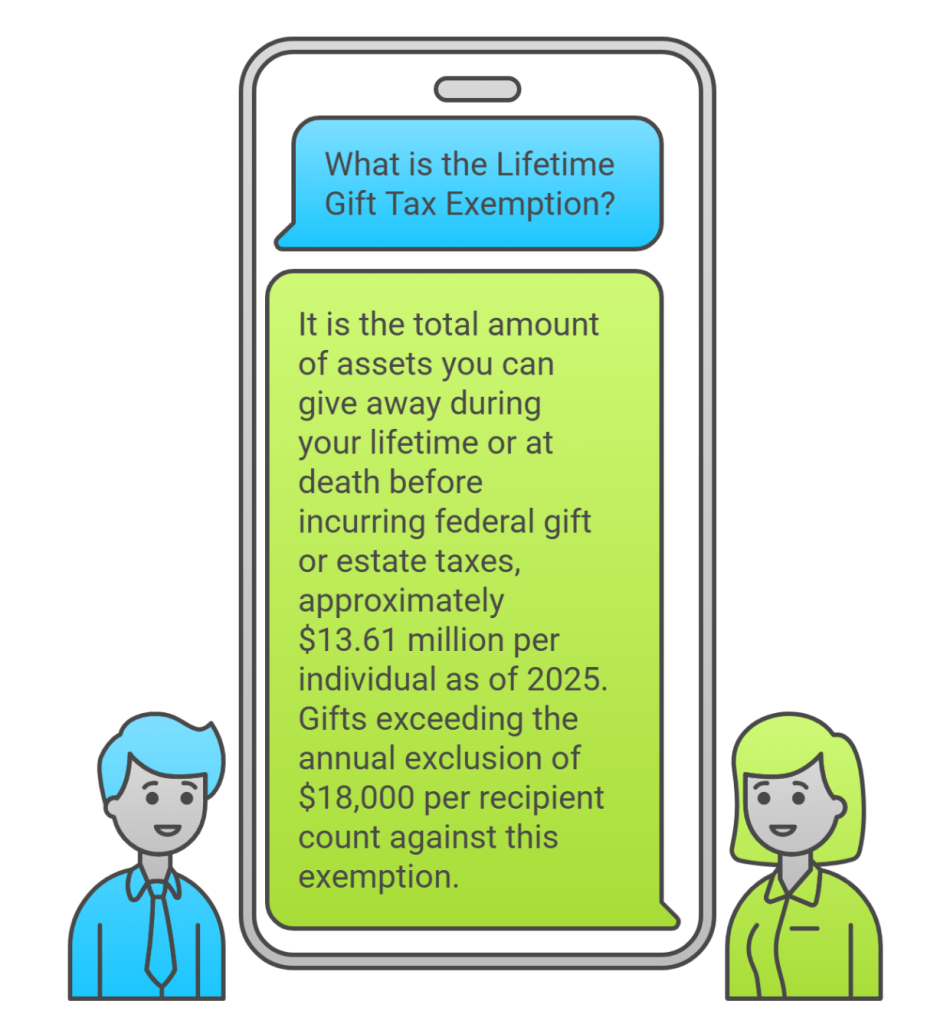
Lifetime gift tax exemption explained
Why Early Gifting Matters for QSBS Planning
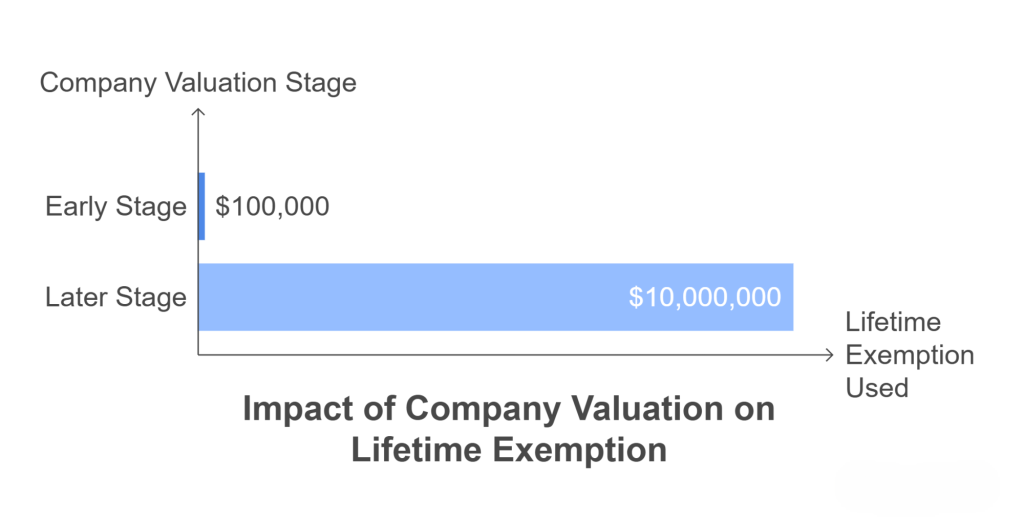
When implementing a QSBS stacking strategy, gifting shares early in your company's lifecycle — when valuations are significantly lower — consumes much less of your lifetime exemption. For example:
Impact of company valuation on lifetime exemption used
- Gifting 10% of your shares when your startup's true value is $1M would require you to use up $100,000 of your lifetime exemption.
- Waiting until your company is worth $100M would require you to use up $10 million of your exemption to gift the same percentage of shares.
Key Insight: By transferring shares through gifts when the fair market value is lower, you create multiple QSBS tax-free buckets while preserving most of your lifetime exemption for other estate planning needs — and transfer potential future appreciation out of your estate.
QSBS Tax Savings: A Real-World Calculation for California Founders
How Much Can You Save? A $20 Million Exit Scenario
To illustrate the practical impact of QSBS stacking, let's examine a realistic scenario for a founder (California resident) that registered her company in 2020 and is now selling her shares worth $20 million after investing an initial $10,000.
Tax benefits of QSBS stacking strategy
Without the QSBS exemption:
- Federal tax liability: $20,000,000 × 23.8% = $4,760,000
- CA tax liability: $20,000,000 × 13.3% = $2,660,000
- Total tax liability = $7,420,000
With basic QSBS exemption (no stacking):
- Reduced taxable gain: $20M − $10M = $10,000,000
- Updated total tax liability = $5,040,000
- Tax savings: $2,380,000
With QSBS stacking (non-grantor trust):
- Federal tax liability = $0
- CA tax liability = $2,660,000
- Updated total tax liability = $2,660,000
- Tax savings: $4,760,000
With Nevada non-grantor trust:
- Federal tax liability = $0
- CA tax liability = $1,330,000
- Tax savings = $6,060,000
Maximum savings: CA founder moves to Nevada with NV trust
- Federal tax liability = $0
- CA tax liability = $0
- Tax savings = $7,360,000
Important Note: California does not conform to federal QSBS rules. The Nevada trust benefits depend on proper structure and administration. It is very important to speak with one of our attorneys when considering multi-state trust planning.
Trust Types for QSBS Stacking: Non-Grantor Trusts, CRTs, and INGs
When implementing QSBS stacking strategies, selecting the right trust structure is crucial. The optimal trust type depends on your specific goals: maximizing your federal tax savings, avoiding state-level taxation, or maintaining access to assets.
Common Trust Structures
- Standard Non-Grantor Irrevocable Trusts — Establishes separate taxpayers to multiply QSBS benefits while removing assets from your estate
- Charitable Remainder Trusts (CRTs) — Allows charitable giving while creating additional QSBS capacity
- Incomplete Non-Grantor Trusts (INGs) — Allows transfer of QSBS while potentially retaining ability to receive distributions from the trust
State Tax Planning: Choosing the Right Trust Jurisdiction
- State income tax rates and treatment of QSBS gains
- Asset protection strength
- Trust law flexibility
- Privacy provisions
- Administrative requirements
View our QSBS state conformity map to see which states tax QSBS gains →
Key Opportunities in QSBS Trust Planning
Balancing access and tax benefits in QSBS trusts
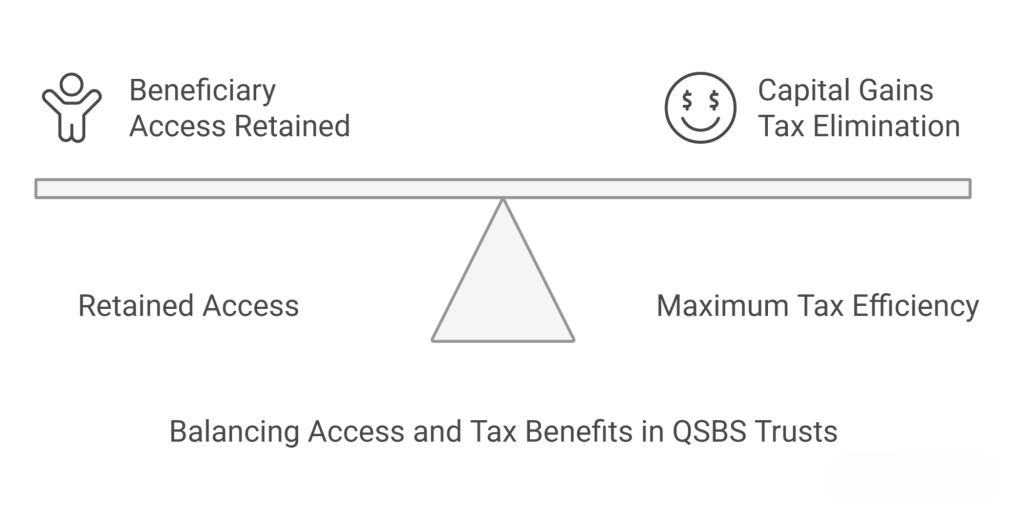
Opportunity 1: Retained Access
- Specialized trust structures can allow you to retain access to trust funds while still creating separate QSBS buckets
- The right structure and jurisdiction can maintain your access to proceeds post-sale
Opportunity 2: Maximum Tax Efficiency
- Strategic trust planning can potentially eliminate both federal and state capital gains tax on qualified QSBS sales
- This outcome depends entirely on selecting the correct trust structure and jurisdiction
Related Resources
Start Your QSBS Planning: Schedule a Consultation
The QSBS exemption, when combined with sophisticated trust planning, offers founders meaningful opportunities to preserve wealth upon an exit event. However, the complexity of these strategies requires careful consideration of your specific circumstances, risk tolerance, and objectives.
Every founder's situation is unique — from your company structure and timelines to your family dynamics and long-term goals. The strategies that maximize savings for one founder may not be optimal for another.
Schedule a free consultation today to discover how these powerful QSBS stacking strategies can be customized to your specific needs.
Schedule a Free Consultation